A monument dealer who takes a deposit before seeing the cemetery's written rules is selling you a problem you will pay to fix. The stone gets carved, the truck arrives, the sexton measures the base, and the marker goes back on the truck because the section allows twenty-four inches of height and the design drawing says thirty. That reversal is expensive and slow, and almost every part of it is avoidable by asking three questions in the right order: who holds the deed, what the section permits, and what the cemetery requires in writing before a setting crew is allowed on the grounds.
The deed holder is not always the next of kin
Interment rights are property, and the person holding them is the person the cemetery will listen to. That may be a grandmother who bought eight spaces in 1962, an estate that never transferred the rights, or a sibling who paid for the burial but never had the deed reassigned. Being the closest surviving relative gives you standing to be heard, not authority to order a marker. Careful buyers pull the deed first, confirm the name printed on it, and find out from the cemetery office exactly what transfer paperwork, death certificate, or notarized affidavit converts that name into a living signature.
Where the deed holder is deceased, the cemetery usually has a written succession policy, often naming a surviving spouse first, then children by seniority, and requiring consent forms from every heir at the same level. Families discover this on a Tuesday and spend six weeks collecting signatures from four states. The fix is boring and works: ask the office for the succession rule in writing, in advance, and start the consent forms while the design is still being drawn rather than after the stone is ordered.
Sections carry their own rules, and they differ inside one cemetery
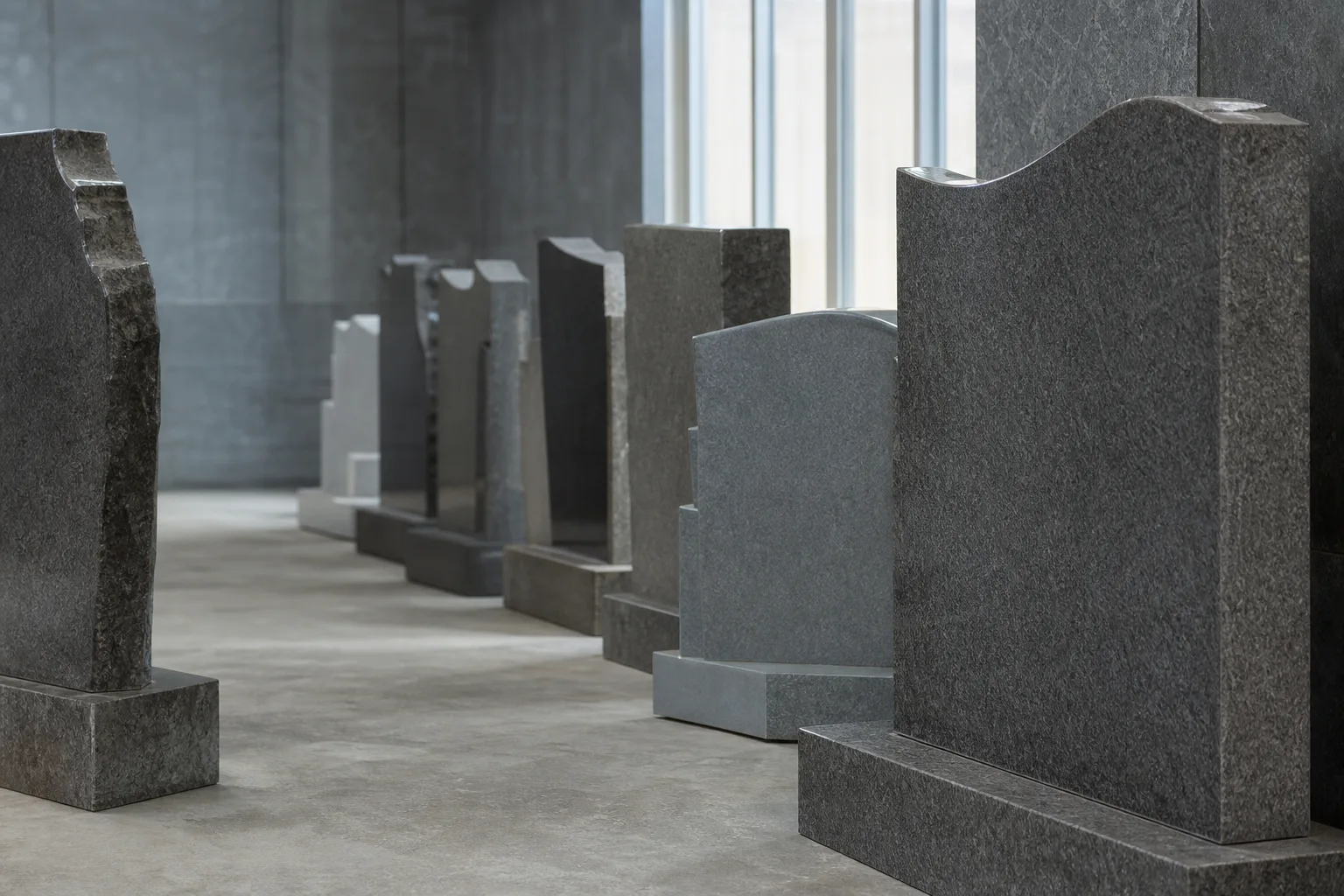
Most cemeteries are not governed by a single standard. A memorial park section may permit only flush bronze markers set level with the turf, so a mower can pass over them, while an older section fifty yards away allows upright granite of substantial height. Restrictions commonly cover overall height, base width and depth, thickness, permitted materials, the ratio of die to base, whether a vase is allowed and whether it must be sunk, and how close the monument can sit to the plot line. Two graves bought in the same transaction can fall under different rules.
A careful reader asks for the specification sheet by name, reads the dimensions against the plot as it is actually surveyed, and checks whether the rule is stated as a maximum or as a fixed requirement. Maximums leave room for design. Fixed requirements do not. It is also worth asking whether the section has been amended since the plot was purchased, because rules adopted later frequently apply to new installations, and a family's memory of what Uncle Ray was allowed in 1978 is not a permit.
Why the dealer wants the specification sheet before quoting
The specification sheet is what turns a sketch into a priced order. It tells the dealer the stone size, the foundation the cemetery requires, whether the cemetery pours the foundation itself and charges a setting fee, whether an outside crew needs proof of liability insurance, and what months the grounds are closed to installation. Each of those changes the number. A dealer working without it is guessing, and the guess almost always favors the dealer, because unknowns get priced as change orders later rather than as line items now.
The Federal Trade Commission oversees consumer protection in funeral goods and services, and the practical expression of that in a monument transaction is simple: itemized pricing, in writing, before money changes hands. Ask that the quote name the cemetery, the section, the permitted dimensions, the foundation charge, and who is responsible if the marker is rejected at delivery. Reputable dealers write this willingly, because the specification sheet protects them as much as it protects you.
The permit is the last gate, and it is a document
Cemeteries generally issue a written memorial permit or installation approval, signed by the office, referencing the approved drawing. The sequence that works is deed confirmed, drawing approved and stamped, permit issued, then stone ordered. Families who reverse the last two steps are betting a four-figure carving on an assumption. Keep the stamped drawing, the permit, and the paid receipt together, because when a footing settles or a vase policy changes, the paperwork is what establishes that the marker was installed with permission and to specification.